AI Coding Turns Senior Engineering Into Agent Management
AI coding agents do not remove the need for senior engineering judgement. They move it into scoping, orchestration, review, architecture, and product control.
Kyluke McDougall
Software-Architekt & Gründer

AI coding has entered a more interesting phase than code generation.
The early question was simple: can the tool write useful code? For many teams, the answer is now yes. Claude Code, Cursor, Replit, Devin, Lovable and similar tools can produce working interfaces, fix bugs, write tests, refactor components and explore unfamiliar codebases with impressive speed.
That does not mean the hard part of software has disappeared.
It means the bottleneck has moved.
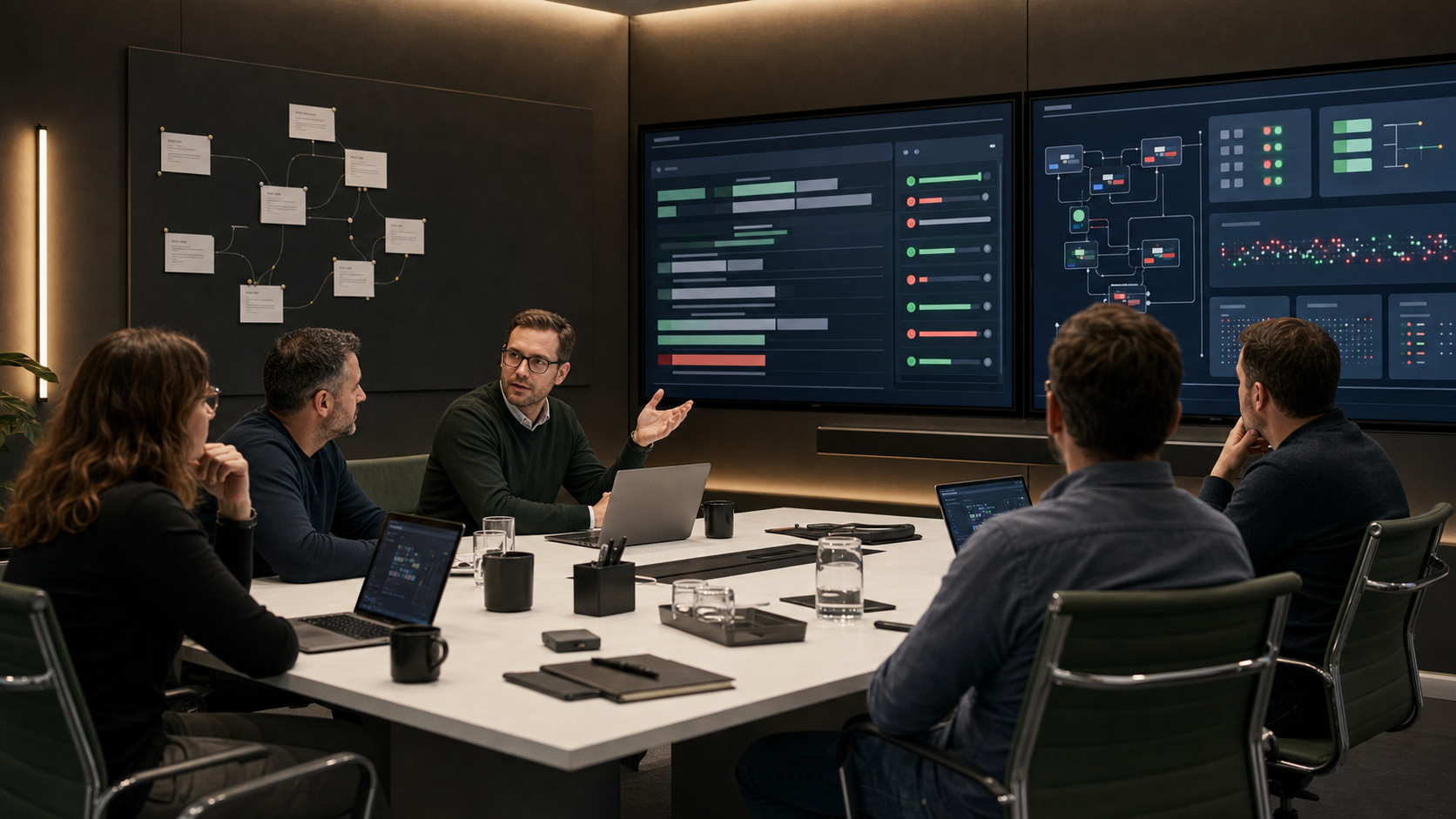
Over the last day, X has been full of discussion around Claude Code and the idea that software engineering is becoming agent management. The useful part of that trend is not the phrase itself. It is the practical implication behind it: when an AI agent can create branches, diffs, tests and implementation attempts faster than a human can type, senior engineering work shifts from writing every line to managing the system that produces, checks and integrates those lines.
For founders, CTOs, product owners and Mittelstand teams, this matters much more than another benchmark.
The question is no longer only “which AI coding tool should we use?”
The better question is: “who is managing the agents, and what are they managing them toward?”
The Developer Is Not Replaced by a Chat Box
A tempting but lazy interpretation of AI coding is that developers become less important.
That is not what serious teams are discovering.
What changes is the shape of the work. A capable agent can implement a small feature, investigate a bug, draft a test suite, migrate repeated patterns or propose a refactor. It can do this quickly, sometimes in parallel, sometimes overnight, sometimes across a codebase too large for one person to comfortably hold in their head.
But the agent still needs direction.
It needs to know what matters and what does not. It needs a task small enough to complete, but meaningful enough to create value. It needs the right files, the right constraints, the right test command, the right definition of done and the right boundaries around risk.
Those are not typing problems.
They are engineering judgement problems.
This is why senior people become more valuable in an agent-assisted workflow, not less. They are the ones who can turn a vague product need into a sequence of safe technical steps. They can see when a proposed shortcut will damage maintainability. They can review a diff for architectural drift, not just syntax. They can decide whether the agent solved the right problem or merely produced plausible movement.
AI coding makes low-context implementation cheaper.
It makes high-context judgement more important.
Agent Management Is Really Scope Management
The first skill in agent management is scope.
A human developer can sometimes survive a vague task because they will stop, ask questions and carry social context from previous conversations. An agent will often try to make progress immediately. That is useful when the task is clear. It is expensive when the task is muddy.
“Improve the onboarding flow” is not a good agent task.
“Add an empty-state message to the onboarding checklist when no integrations exist, keep the existing layout, add one regression test, and do not change the API contract” is much better.
The difference is not prompt cleverness. It is product and engineering clarity.
Good agent management means defining:
- the intended user outcome;
- the part of the codebase the agent may touch;
- the files or modules that are out of scope;
- the test or review evidence required;
- the level of design freedom allowed;
- the risks that need human approval;
- the point at which the agent should stop and ask.
This is where many teams will either gain leverage or create noise.
If every agent task turns into a broad exploration, a sprawling diff and a long review argument, the tool has not accelerated delivery. It has moved the work into cleanup. If the task is well framed, the agent can become a useful implementation partner.
At McDougall Digital, this is one of the main reasons we start with architecture and product judgement before automation. AI can move quickly, but it moves best inside a clear shape. Without that shape, speed turns into churn.
Review Becomes the Center of the Workflow
When agents produce more code, review becomes more important.
That sounds obvious. It is also where many AI adoption experiments quietly fail.
Teams get excited by the speed of generation and underestimate the cost of integration. A tool creates five possible implementations. A developer now has to inspect them, understand the assumptions, run tests, compare approaches and decide what should enter the product. If the team lacks clear review standards, the agent has created more work, not less.
In a mature agent-assisted workflow, review is not the final bureaucratic step. It is the center of the loop.
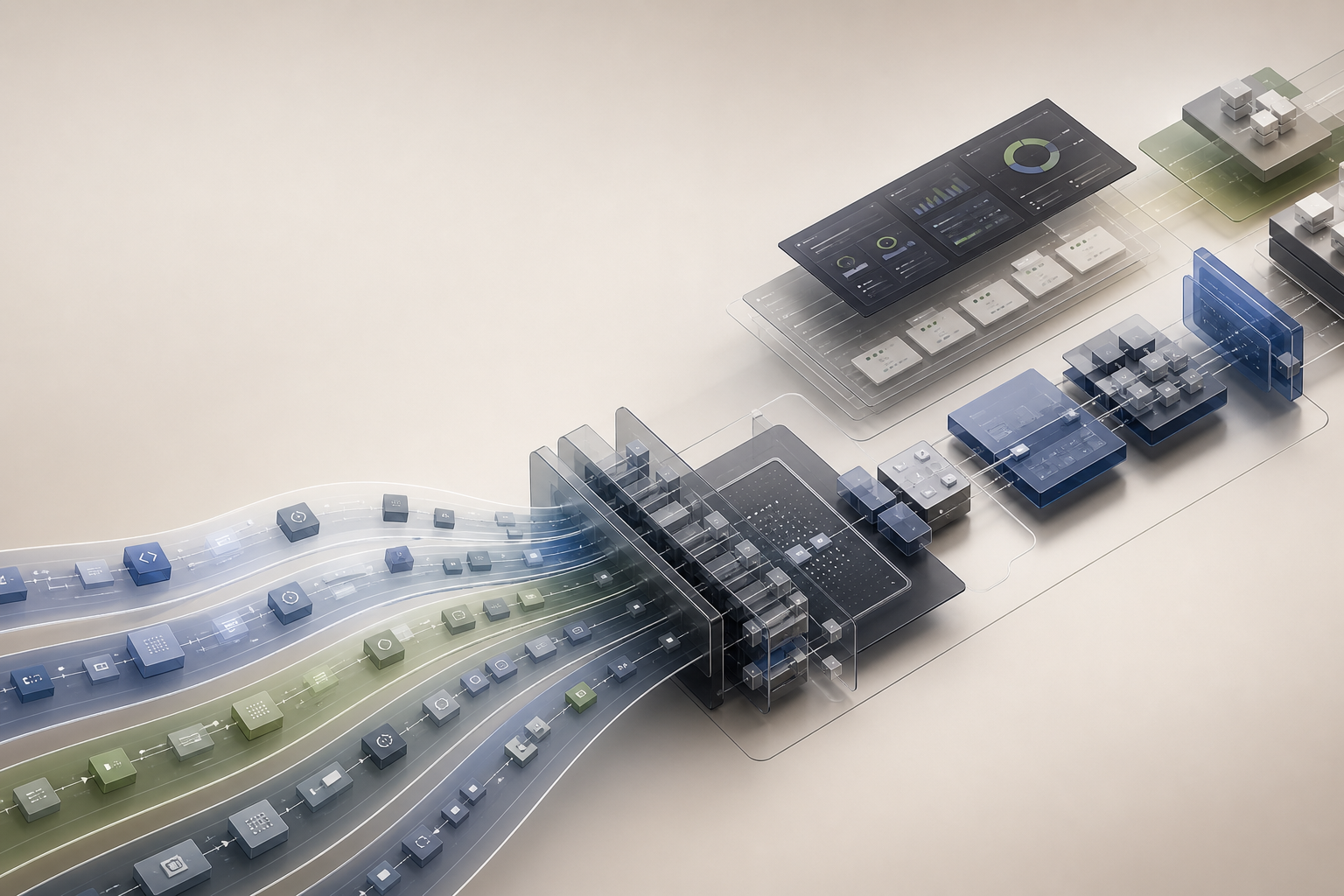
The agent proposes. The system tests. The human reviews intent, architecture and risk. The agent revises. The human decides whether the result belongs in the product.
This changes what teams should measure.
Lines of code generated is not a useful metric. Number of agent sessions is not a useful metric. Even pull request volume can be misleading if the work is fragmented or shallow.
Better questions are:
- did the agent reduce cycle time for well-scoped work?
- did the review burden stay reasonable?
- did test coverage improve or degrade?
- did the architecture stay coherent?
- did the team catch more issues before production?
- did product decisions become clearer or more confused?
AI coding makes it easy to create more software activity.
Clients do not need more activity. They need reliable progress.
The Senior Engineer Becomes a Workflow Designer
The most interesting senior engineering work in an AI-assisted team may become workflow design.
Not in the abstract enterprise-process sense. In the very practical sense of deciding how work moves from idea to production.
Which tasks are safe for an agent to attempt alone? Which tasks need a planning phase first? Which changes require a human-written design note? Which files are sensitive? Which commands may run automatically? Which tests are mandatory before a pull request? Which parts of the codebase need stricter ownership?
These decisions shape the output more than the model does.
A weak workflow turns a strong agent into a source of random diffs.
A strong workflow turns the same agent into a useful part of the delivery system.
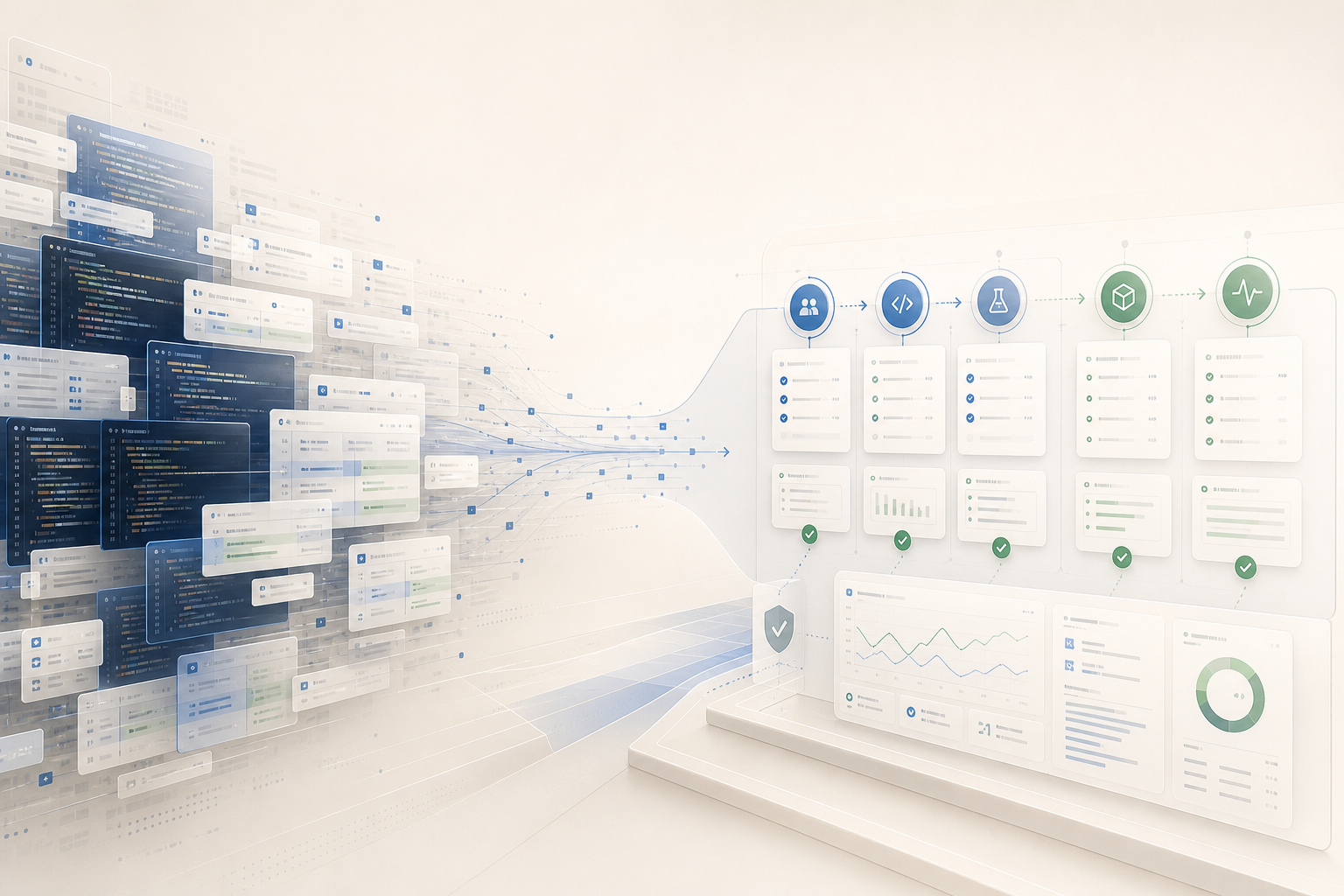
For example, a team might create different lanes:
- exploration tasks, where the agent reads code and produces a short technical note;
- implementation tasks, where the agent changes a narrow part of the product;
- test tasks, where the agent adds regression coverage for known behavior;
- refactoring tasks, where the agent works only inside agreed boundaries;
- operations tasks, where the agent investigates logs but cannot act on production systems.
Each lane should have different permissions, review expectations and success criteria.
This does not need to be heavyweight. A small SaaS team can start with simple templates and branch rules. A Mittelstand team with compliance obligations may need stronger audit trails, access controls and approval gates. The principle is the same: match agent freedom to task risk.
That is engineering management in the agent era.
Product Judgement Still Wins
There is another risk hidden inside the AI coding conversation: confusing implementation speed with product progress.
An agent can make a feature exist. That does not mean the feature should exist.
It can create a settings screen, add a dashboard widget, wire a new integration, generate an admin tool or produce a polished prototype. The output may look real enough to create momentum. But product work is not only about making things possible. It is about deciding what is worth building, what should be simplified and what should be left out.
This is especially relevant for founders.
AI coding lowers the cost of trying ideas. That is useful. It also lowers the cost of cluttering the product, adding half-owned features and creating technical obligations before the business case is clear.
The best teams will use agents to explore more options while becoming stricter about what reaches production.
They will separate prototype speed from product commitment. They will ask whether a feature improves activation, retention, operational efficiency or customer trust. They will decide whether the architecture can carry it. They will remove experimental code that does not earn its place.
Agent management is not only technical control.
It is product control.
What Serious Teams Should Do Now
The practical move is not to ban AI coding or to let everyone improvise.
The practical move is to introduce it as an operating model.
Start with a small set of use cases where the risk is low and the feedback is clear. Bug investigations. Test generation. Internal tooling improvements. Documentation updates. Narrow UI changes. Refactors inside well-understood modules.
Then define the loop:
- how the task is written;
- what context the agent receives;
- what the agent may change;
- which commands it may run;
- what evidence it must produce;
- who reviews the result;
- how the team records lessons from failures.
After that, expand carefully.
The goal is not to make every developer “use AI more.” The goal is to make AI-supported delivery more dependable than ad hoc enthusiasm.
This is where McDougall Digital can help. We work with teams that want the speed of AI-supported development without losing architecture, maintainability or product judgement. That often means designing the delivery workflow first: where agents belong, where humans stay in control, where review gates matter, and how to turn prototypes into systems that can survive real customers.
AI coding is becoming powerful enough that ignoring it is expensive.
But adopting it without management is also expensive.
The winners will not be the teams that generate the most code.
They will be the teams that learn how to manage agents toward the right product, inside the right architecture, with the right level of control.