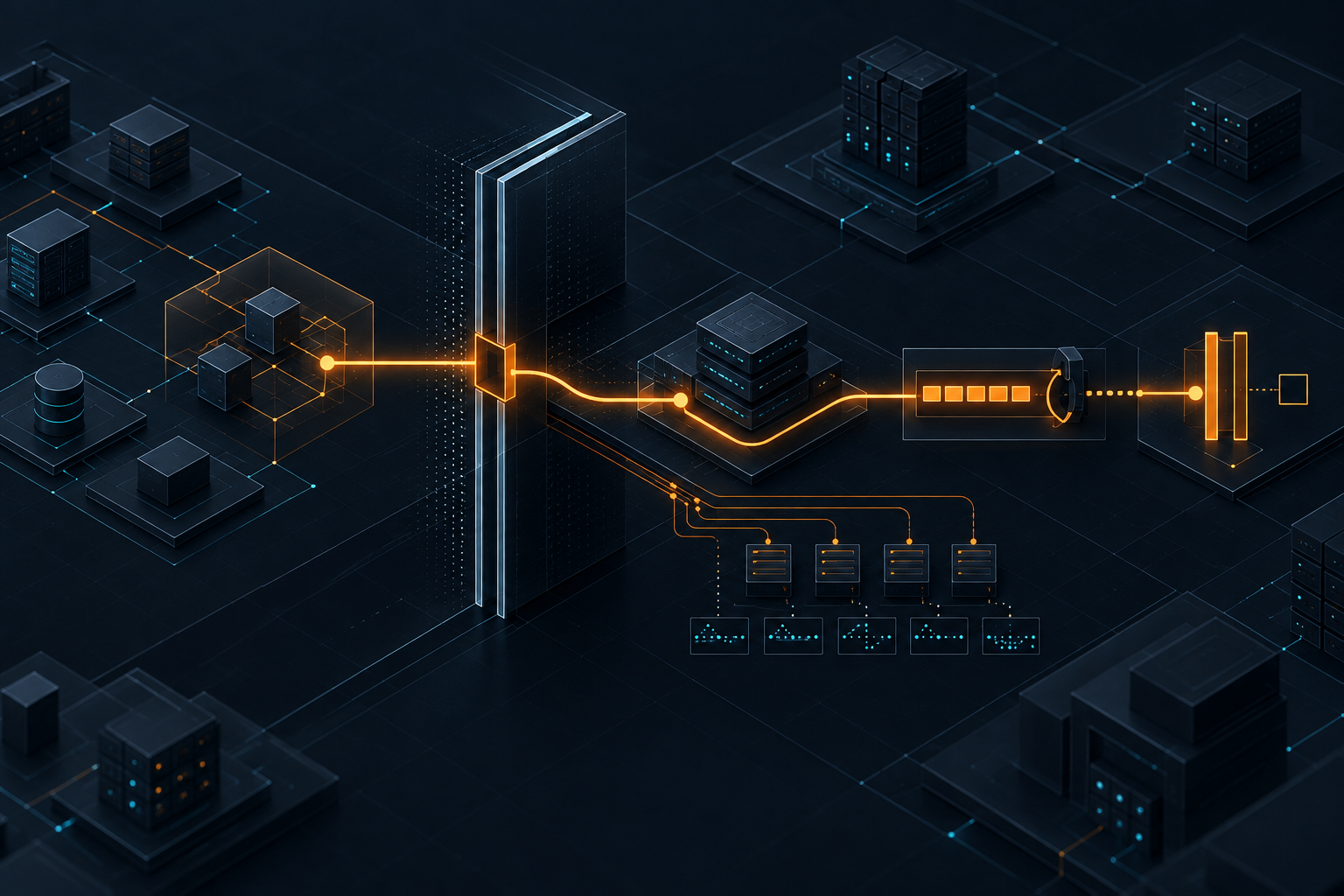
An AI Agent Reached Production. Your Sandbox Is Not the Boundary.
The OpenAI and Hugging Face incident turns agent containment from a theoretical concern into an architecture and operations requirement.
MCP 2026-07-28 removes protocol sessions and makes remote servers easier to scale. Here is what production teams should redesign before upgrading.
Agentic coding tools can now change files, run commands, and influence delivery. Serious teams need production gates for secrets, dependencies, tests, architecture, and auditability.
AI coding agents can speed up delivery, but production teams need bounded permissions, short-lived credentials, policy gates, sandboxing and audit logs before giving agents real access.
AI coding agents are becoming part of software delivery. The hard question for product teams is how much autonomy they get, what they can access, and how their work is verified before it reaches production.
AI-assisted prototypes are becoming real systems. The risk is not vibe coding itself, but letting generated work cross into production without ownership, evidence, and release boundaries.
Claude Code, Cursor, Codex-style agents, and CI agents can move software work faster. The teams that benefit most are the ones that build verification loops around that speed.
Malware persisting through AI coding tool configuration is a useful warning: project rules, agent settings, and editor automation now need the same ownership and review as other delivery-system code.
Coding agents accelerate implementation. Production readiness still comes from context, architecture, guardrails, tests, and clear ownership.