More AI coding capacity is not the same as more delivery capacity
Claude Code limit increases and production-agent adoption are a useful signal. The next bottleneck for serious teams is not generation speed, but product judgement, architecture, review and operations.
Kyluke McDougall
Software Architect & Founder
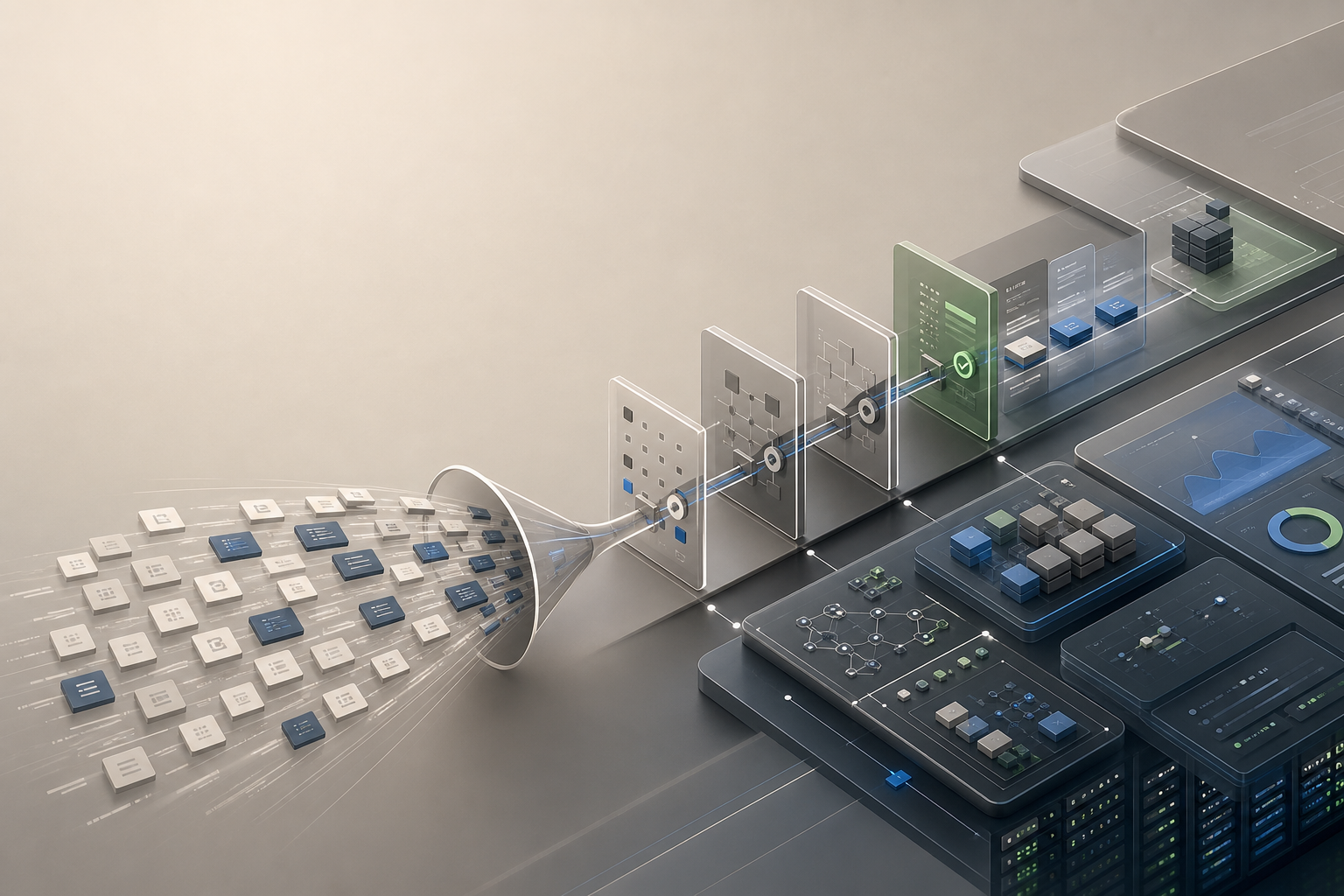
AI coding tools are getting more room to work.
The current discussion on X around Claude Code limit increases is a useful signal. Developers are not only talking about better answers or nicer autocomplete. They are talking about longer sessions, larger repository tasks, review loops, sustained agent workflows and the practical ability to keep AI coding tools active for more of the working day.
At the same time, another part of the discussion points to large engineering organizations using AI agents for real production work, not just experiments.
For founders, CTOs and product owners, this is more important than it may look at first.
The obvious reaction is: good, the tool is less constrained.
The better reaction is: if implementation capacity increases, what becomes the new bottleneck?
Because for serious products, the answer is rarely “typing code”.
When AI can produce more code, more tests, more pull requests, more prototypes and more refactoring suggestions, the scarce resource shifts. It moves toward product judgement, architecture, review quality, operational discipline, cost control and the ability to decide what should not be built.
That is a management and architecture problem, not just a tooling update.
Code generation is becoming less scarce
For years, software teams were shaped by a simple constraint: implementation time was expensive.
Every feature competed for developer attention. Every internal tool had to justify itself. Every refactor was weighed against roadmap pressure. Even small integrations could wait for months because the team had more ideas than hands.
AI coding tools change that constraint.
They do not remove engineering work, but they reduce the cost of producing first drafts, scaffolding, tests, migrations, UI states, scripts, documentation and alternative implementation paths. A developer can explore more options. A founder can make a workflow tangible. A product team can test an internal tool earlier. A CTO can ask for a proof of concept without blocking a whole sprint.
That is genuinely useful.
But lower implementation friction does not automatically create better software.
It creates more software.
More branches. More partial features. More generated tests. More infrastructure experiments. More one-off scripts. More “almost finished” internal tools. More code that seems fine in isolation, but has not been integrated into a coherent product and operating model.
If the old bottleneck was “who can build this?”, the new bottleneck becomes “who decides whether this belongs in the system at all?”
The risk is not only bad code
Many conversations about AI coding still focus on code quality: hallucinated APIs, brittle tests, security mistakes, verbose implementations, hidden edge cases.
Those risks are real.
But they are not the whole problem.
An AI-generated change can be technically acceptable and still be the wrong change.
It might solve a symptom while making the product harder to understand. It might add a dependency that creates long-term maintenance cost. It might introduce a second pattern where one already existed. It might automate a workflow that should have been simplified first. It might create an admin interface before the team has decided who owns the underlying data. It might build a feature because it was easy, not because the product needed it.
This is where serious teams need to be careful.
AI coding tools are very good at continuing from the context they are given. If the context is a clean architecture, clear product intent and a well-tested codebase, they can be powerful. If the context is a confused product, inconsistent architecture and weak operational ownership, they accelerate that confusion.
The tool does not know which business complexity is worth preserving and which should be removed.
That judgement has to come from the team.
More AI budget can create less delivery clarity
The X discussion around higher limits also has a practical business side: usage capacity, API limits and agent workflows turn AI coding into an operating cost.
That cost may be worth it. In many teams, it will be.
But it should not be invisible.
If every developer can run long AI sessions, if agents can process large repositories, if automated review and implementation loops become normal, then the team needs to understand what the spend is buying.
Useful questions include:
- Which tasks are AI tools genuinely good at in our codebase?
- Which tasks still need senior human design before implementation?
- Which workflows save time, and which only create more review work?
- Where do AI tools reduce cycle time without increasing risk?
- Which generated changes are being merged, reverted or rewritten?
- What is the cost per useful outcome, not just the monthly subscription cost?
This matters for Mittelstand teams and growing product companies especially. They often cannot afford an uncontrolled tool sprawl where every department buys its own AI stack, connects it to repositories and calls the result innovation.
The goal is not to spend less on AI.
The goal is to spend where it actually improves delivery.
The operating model matters more than the tool list
Most teams do not need a philosophical AI strategy before using coding tools.
They do need an operating model.
That sounds heavier than it is. In practical terms, it means deciding how AI-assisted work flows through the team.
For example:
- Where may AI tools read code, data and documentation?
- Which tools are approved for which repositories?
- Which tasks are good candidates for autonomous or semi-autonomous execution?
- What must always remain human-designed?
- What is the pull request size limit for AI-generated work?
- Which tests must pass before review?
- Who owns security and architecture decisions?
- How are generated decisions documented?
- How do teams measure whether AI support actually improved delivery?
These are not bureaucratic questions. They are how a team prevents speed from turning into noise.
At McDougall Digital, this is the part of AI-supported development we take seriously: the tool is only useful when it sits inside a delivery system that protects the product. A good workflow lets AI remove friction without removing responsibility.
Architecture becomes more important, not less
There is a tempting but dangerous idea in AI software development: if code becomes easier to generate, architecture matters less.
The opposite is true.
Architecture becomes the thing that tells faster tools where to stop.
Clear module boundaries help an agent make local changes without rewriting half the system. Good domain models reduce the chance that generated code invents a parallel concept. Consistent API patterns make generated integrations easier to review. Strong test boundaries show whether behaviour changed. Sensible deployment environments prevent a prototype from accidentally becoming production.
Without those boundaries, AI coding tools can still move quickly. But they move through mud.
They create new files instead of understanding existing ones. They duplicate logic. They patch around symptoms. They produce a working path for the happy case, then leave humans to discover the hidden cost later.
For a founder or CTO, this is the main lesson: do not use AI acceleration as a reason to postpone architecture.
Use it as a reason to clarify architecture earlier.
Product judgement is now a competitive advantage
If many teams can generate software faster, the differentiator is not only who writes code.
It is who chooses better.
Which customer workflow deserves automation? Which internal process should be simplified before it is turned into software? Which feature creates actual market value? Which integration should be avoided because it creates operational dependency? Which prototype should be thrown away after learning from it?
AI tools make it easier to build the wrong thing convincingly.
That is why product judgement matters more when implementation gets cheaper.
For founders, this can be uncomfortable. A working prototype feels like progress. A dashboard feels like progress. A new internal tool feels like progress. But the real question is whether the software makes the business easier to run, the product easier to sell, or the customer experience meaningfully better.
If not, more coding capacity just creates more surface area to maintain.
A practical adoption path
Teams do not need to solve everything at once.
A sensible path starts small and becomes more deliberate over time.
First, identify the low-risk, high-value work:
- test improvements;
- documentation updates;
- small UI states;
- internal scripts;
- refactoring inside a narrow module;
- migration preparation with human review;
- bug reproduction and analysis;
- prototype exploration away from production data.
Then define the boundaries:
- no production secrets in AI contexts;
- no direct production deployment by agents;
- no large mixed pull requests;
- no generated architecture decisions without human approval;
- no customer-data workflows without a security review;
- no dependency additions without a reason.
Then measure the results:
- cycle time on selected task types;
- review time;
- defect rate;
- reverted changes;
- cost per useful merged change;
- developer experience;
- operational incidents or near misses.
This is not about slowing the team down. It is about making acceleration reliable enough that the team can trust it.
The question for CTOs and product owners
The current wave of AI coding capacity is good news.
But it asks a sharper question than “which tool should we buy?”
The better question is:
If our team can produce twice as many implementation attempts, can our product process, architecture, reviews, tests and operations absorb them?
If the answer is yes, AI coding can become a serious advantage.
If the answer is no, the team may simply create a faster backlog of half-reviewed changes, tool bills, prototype leftovers and maintenance debt.
The difference is not the model alone.
The difference is the delivery system around it.
How McDougall Digital can help
McDougall Digital helps teams use AI-supported software development without losing the engineering judgement that serious products need.
That can mean reviewing your current AI coding workflow, defining sensible tool permissions, improving architecture boundaries, setting up review and test gates, hardening deployment paths, or turning a promising prototype into maintainable production software.
The goal is not to make AI usage look impressive.
The goal is to make delivery better: clearer product decisions, faster useful implementation, fewer hidden risks and software that remains operable after the first exciting demo.
More AI coding capacity is coming.
The teams that benefit most will be the ones that know what to do with it.