Loop Engineering: Why AI Coding Agents Need Architecture, Not Just Prompts
AI coding agents become useful in production when teams design feedback loops around them: tests, review, security gates, telemetry, rollout control, and clear ownership.
Kyluke McDougall
Founder of McDougall Digital, building AI-supported software systems with an architecture-first approach.

AI coding agents are getting better at staying inside a task for longer.
That is useful. It is also where the risk begins.
A short autocomplete suggestion is easy to inspect. A single generated function can be reviewed in context. But when an agent works across files, updates tests, edits configuration, runs commands, reacts to failures, and proposes a final diff, the management question changes.
The question is no longer, “Can the model write code?”
It is, “What system tells us whether this work should be trusted?”
That is why the current discussion around loop engineering matters. The term is timely, but the principle is durable: AI agents only become reliable when they are embedded in feedback loops that connect product intent, engineering quality, operational reality, and human judgment.
Prompts are not enough. Production teams need loops.
Prompting Is Not an Operating Model
Most teams start with AI coding in a simple pattern:
- describe the task;
- let the tool produce code;
- review the result;
- merge if it looks good.
That can work for small, low-risk changes. It does not scale cleanly into production software delivery.
The problem is not that prompts are useless. Good instructions matter. Clear context matters. But a prompt is only the opening move. It does not prove that the implementation matches the product need. It does not enforce architectural boundaries. It does not know whether a migration is safe for real customer data. It does not create an audit trail or decide when a change should be rolled back.
When leaders treat AI coding as a prompt-writing exercise, they over-focus on the agent and under-design the surrounding system.
That is backwards.
The agent is only one component in a delivery architecture. The real leverage comes from the loops around it.
What Loop Engineering Means in Practice
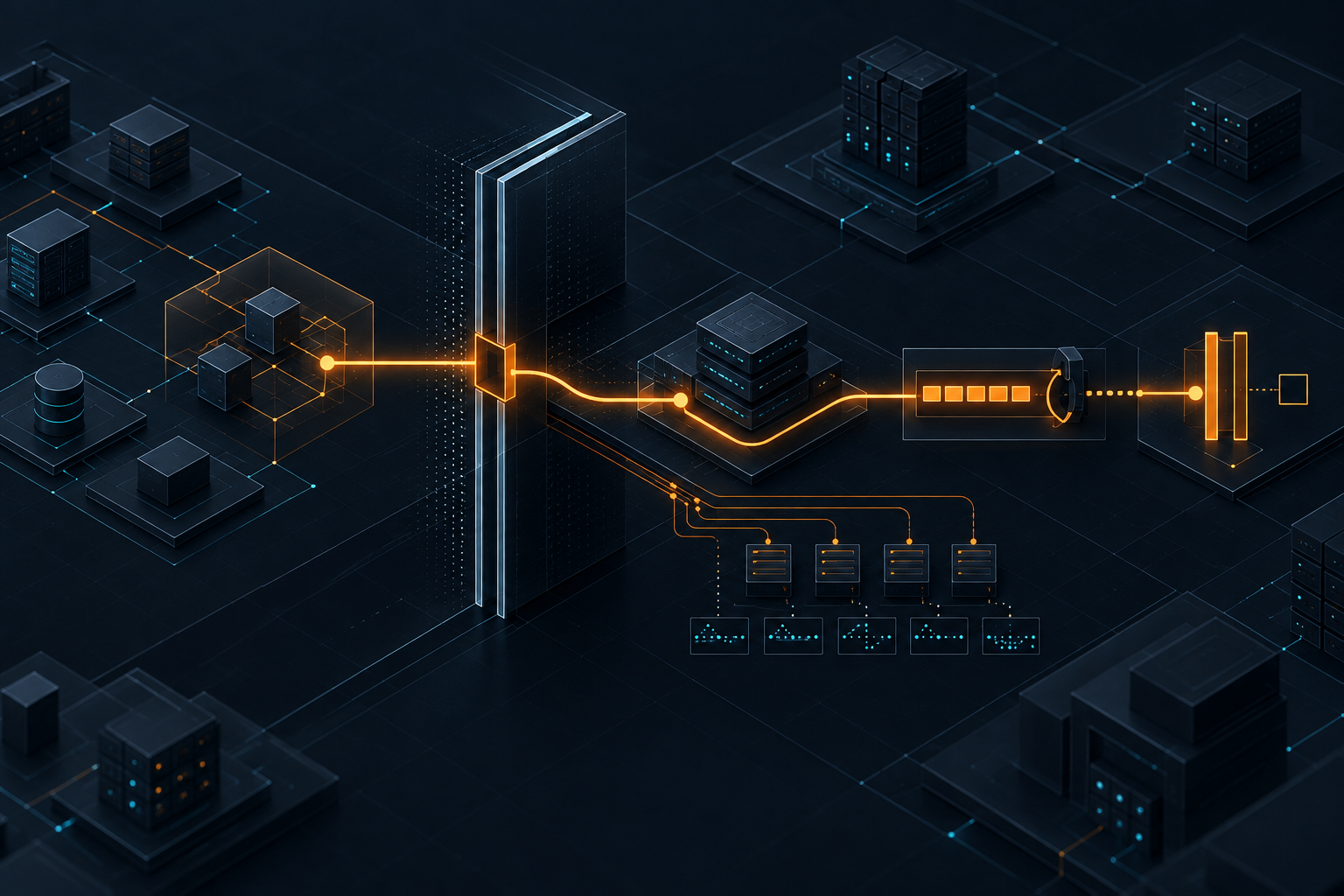
Loop engineering means designing the feedback paths that guide, constrain, evaluate, and improve agentic work.
For an AI coding agent, those loops usually sit at several levels.
The product loop asks whether the agent is solving the right problem. That means clear acceptance criteria, examples, non-goals, user impact, and a testable definition of done.
The engineering loop asks whether the change belongs in the codebase. That means tests, static analysis, type checks, architecture boundaries, dependency rules, code ownership, and review standards.
The developer feedback loop helps the agent recover from mistakes while work is still in progress. That includes failing tests, lint output, compiler errors, targeted review comments, and tool results that are structured enough for an agent to act on.
The operations loop asks whether the change behaves safely after deployment. That means telemetry, feature flags, rollout stages, alerts, error budgets, logs, rollback paths, and incident learnings that feed back into future work.
The security and governance loop asks what the agent is allowed to touch. That means least-privilege credentials, sandboxed execution, approval gates, secret handling, dependency review, audit trails, and policies for high-risk actions.
None of this is exotic. It is normal software engineering, made more important by the speed and autonomy of AI.
The Hour-Long Agent Needs Boundaries
One reason loop engineering is becoming more visible is that agents now handle longer autonomous runs. An agent might read a ticket, inspect the repository, edit files, run tests, fix failures, update documentation, and return a pull request.
That is valuable when the work is bounded.
It is dangerous when the boundaries are vague.
A production team should not ask, “Can we let the agent run for an hour?” It should ask:
- What files and systems can it access?
- What commands can it run without approval?
- Which tests must pass before a human sees the result?
- What evidence must the agent attach to its final answer?
- Which changes require explicit human approval?
- How do we detect when the agent is stuck, looping, or widening scope?
- How do we roll back the work if production behavior changes?
Longer autonomy increases the value of feedback. It also increases the cost of missing feedback. A one-line mistake is a review issue. A one-hour chain of plausible but wrong decisions can become architecture debt.
Architecture Turns Agent Output Into Delivery Evidence
The strongest AI coding setups do not rely on trust. They generate evidence.
For example, a good agent task should start with acceptance tests or at least testable acceptance criteria. The agent can draft implementation details, but the target state should be externally visible. If the feature is a billing rule, the expected scenarios should be explicit. If the task is a refactor, the preserved behavior should be measurable. If the change touches security-sensitive code, the review path should be stricter before work begins.
Static analysis and type systems become part of the loop. They catch errors without waiting for a human reviewer. Architecture rules prevent the agent from solving a local problem by weakening a boundary elsewhere. Dependency checks reduce the chance of importing a convenient package with an unacceptable risk profile.
Human review remains essential, but it changes shape. Reviewers should receive a clear diff, test evidence, known limitations, trade-offs, and a short explanation of why the change fits the architecture.
Telemetry then closes the loop after release. If a change affects conversion, latency, support volume, error rates, or operational load, the team should know. Otherwise, the agentic workflow is only optimizing for merge, not for business outcome.
A Practical Checklist for Production Teams
Founders, CTOs, and product owners do not need a research lab to start using loop engineering. They need a disciplined delivery system.
Before giving an AI coding agent more autonomy, check the basics:
- Does the task have concrete acceptance criteria?
- Are there tests that prove the important behavior?
- Can the agent run only the commands it needs?
- Are secrets and production credentials out of reach?
- Are high-risk files, migrations, and infrastructure changes gated?
- Is there a clear owner for the final decision?
- Does the pull request include test output and implementation notes?
- Are static analysis, type checks, and dependency checks part of the path?
- Can the change be released gradually?
- Is rollback simple and rehearsed?
- Will telemetry show whether the change helped or hurt?
- Are agent failures captured so the process improves over time?
Loop engineering is not about creating bureaucracy around AI. It is about making faster delivery safer, clearer, and more repeatable.
The Business Case Is Control
For many companies, the fear around AI coding is framed as a quality problem. That is only partly true. The deeper issue is control.
Leaders want faster delivery, but they do not want fragile systems, hidden security exposure, unclear ownership, or a team that can no longer explain how the product works. They want the benefits of agentic development without turning the codebase into a collection of plausible patches.
Loop engineering is how those goals meet.
It lets teams use AI agents aggressively where evidence is strong and cautiously where risk is high. It gives developers better leverage without removing professional judgment. It gives managers a clearer way to discuss readiness than asking whether a tool is “good enough.” It gives clients a delivery process they can trust.
The companies that get this right will not be the ones with the cleverest prompts. They will be the ones that design the best feedback loops around the work.
AI coding agents can create speed.
Architecture decides whether that speed compounds into durable software.
This article was created with the help of AI. McDougall Digital is responsible for its content.